
STORY YOUMISSED




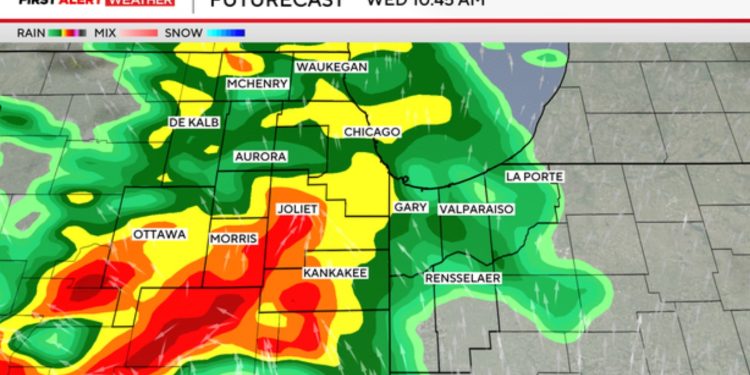
The Chicago area faces another potential tornado outbreak on Wednesday as two distinct rounds of severe storms move through the region.
CBS News Chicago reports that this incoming weather system appears stronger than the one that caused at least 13 tornado touchdowns across Northern Illinois and Northwest Indiana last Thursday.
Thousands of residents currently remain without power following last week’s severe weather event.
The first round of storms will begin around 8 a.m. and persist through the early afternoon.
Meteorologists expect this initial wave to bring large hail and damaging winds to areas south of I-80.
Areas north of I-80, including Chicago, will likely experience heavy rainfall during the morning period.
This initial precipitation will elevate the flash flood threat for the entire region.
The atmosphere will likely recharge between the two events as a warm front lifts north and a low-pressure system moves closer.
The second, more dangerous wave of storms will arrive after 1 p.m. and continue until mid-evening.
A level 4 out of 5 moderate risk for severe weather is currently in place for areas south of I-80.
Residents south of I-80 should prepare for the significant threat of strong, potentially EF-3 or greater tornadoes.
This second round also carries the risk of damaging wind gusts reaching 70 to 80 miles per hour.
North of I-80 and along the I-88 corridor, the region faces a significant threat of damaging winds, heavy rain, and localized flash flooding.
Tornadoes remain possible in these northern areas, even if the primary threat level is higher to the south.
Widespread flash flooding remains a major concern area-wide due to the cumulative effect of both storm rounds.
Property owners should prepare for the possibility of river flooding and basement flooding as the storms move through at speeds of 50 miles per hour or greater.
Stay Informed and Prepared
1. Charge all essential electronics and battery backups immediately while power remains available.
2. Identify the lowest level of your home or a windowless interior room to use as a storm shelter.
3. Clear debris from gutters and downspouts to allow for maximum water drainage around your property.
4. Monitor CBS News Chicago for real-time weather alerts and emergency instructions throughout the day.
5. Keep a flashlight, a portable radio, and a first-aid kit accessible in case of power outages or storm damage.