
STORY YOUMISSED
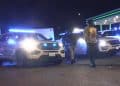



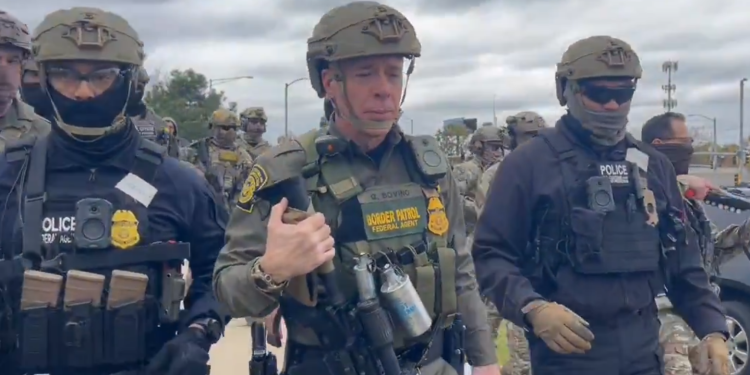
U.S. Border Patrol official Gregory Bovino and many of the agents under his command are planning to leave the Chicago area as early as this week, according to three U.S. officials who spoke to CBS News.
The planned exit follows a months-long, contentious federal crackdown known as Operation Midway Blitz.
More than 200 Border Patrol agents were deployed to Chicago by the administration to curb crime and illegal immigration.
However, the operation was quickly criticized by local leaders as heavy-handed and unjustified, marked by controversial arrests and tense clashes with protesters.
Judicial Rebuke Over Force
The Border Patrol’s tactics, which included the use of tear gas, pepper spray, and video evidence of agents pointing guns at civilians, drew immediate legal scrutiny.
Last week, U.S. District Court Judge Sara Ellis castigated the use of force employed by the federal agents.
Judge Ellis extended restrictions that severely limit when federal officers can use crowd control tactics and ordered Bovino’s agents to generally wear body-worn cameras and display identifiers.
Bovino, who once called his agency’s use of force “exemplary,” previously stated that the mission’s goal was both arrests and deterrence.
The departing Border Patrol teams may be diverted to an operation in Charlotte, North Carolina. However, Immigration and Customs Enforcement (ICE) is expected to continue carrying out immigration arrests in the Chicago region.
DHS Insists Operation Was a Success
Despite the planned shift in leadership and personnel, the Department of Homeland Security (DHS) firmly pushed back against any suggestion of a complete federal retreat.
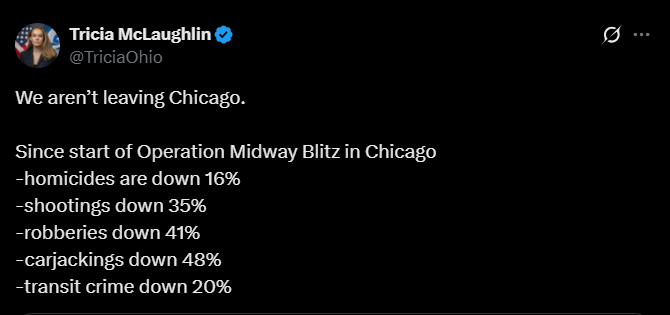
Assistant Secretary Tricia McLaughlin reacted to the news, stating directly: “We aren’t leaving Chicago.” McLaughlin then claimed the controversial operation delivered massive reductions in violent crime:
- Carjackings are down 48%
- Shootings are down 35%
- Robberies are down 41%
- Homicides are down 16%
- Transit crime is down 20%
McLaughlin’s statement frames the deployment as a major success, contrasting the judicial and public backlash with measurable results in public safety.