
STORY YOUMISSED



Chicago’s streets are a chaotic battlefield of delivery drivers, distracted commuters, and erratic weather.
The scene of a car accident in this city feels like a blur of sirens and shattering glass.
Adrenaline spikes, your heart races, and the urge to just “get it over with” becomes overwhelming.
Here is the reality: what you do in the sixty minutes following a crash determines if you get paid or if you get sued.
As an investigative reporter, I have seen insurance companies deny life-changing claims because of a single missing detail at the scene.
Do not let a split-second mistake on the Dan Ryan or a side-street in Englewood ruin your financial future.
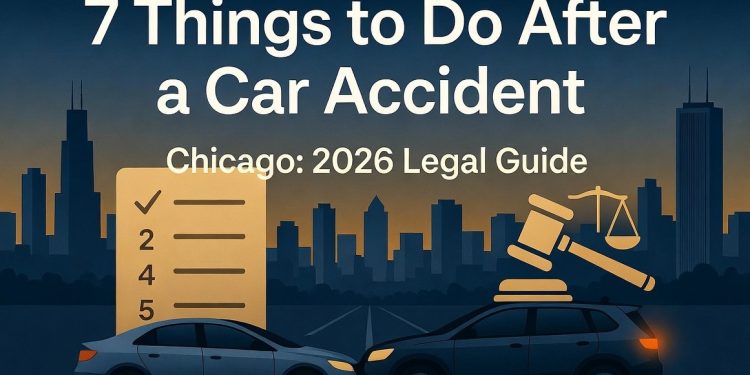
Follow these seven steps to navigate the aftermath of a Chicago collision with the precision of a professional.
1. Check for Injuries and Secure the Scene
Your first priority is the human element before the legal one.
Assess yourself and your passengers for any signs of trauma, even if you feel “fine” in the moment.
Chicago traffic does not stop for your misfortune, so move your vehicle to the shoulder if it is safe to do so.
If the car is disabled on a busy stretch like Lake Shore Drive, stay inside with your seatbelt buckled until help arrives.
Turn on your hazard lights immediately to alert other drivers who may be distracted by their phones.
2. Call 911 and Request a Chicago Police Report
Never “settle it privately” with another driver on a Chicago street corner.
A handshake in Lincoln Park means nothing when you try to file an insurance claim forty-eight hours later.
Dial 911 immediately and clearly state your location, citing nearby landmarks like the Willis Tower or a specific CTA station.
Wait for the Chicago Police Department to arrive so they can create an official accident report.
This document is the “Golden Ticket” that investigative teams and lawyers use to prove who was actually at fault.
3. Capture the Scene Like a Crime Reporter
Pull out your smartphone and start documenting the evidence as if you were filing a front-page story.
Take wide shots of the entire intersection to show the traffic signals and any skid marks on the pavement.
Capture close-up photos of the damage to all vehicles involved, ensuring the license plates are clearly visible.
Photograph the weather conditions and any road hazards, such as the deep Chicago potholes that might have contributed to the crash.
The scene will be cleared in minutes, and once the glass is swept away, your photos are the only truth that remains.
4. Exchange Information Without Admitting Fault
You must gather the vitals: names, phone numbers, and full insurance policy details from every driver involved.
Be polite, but remain professionally distant.
Never say “I’m sorry” or “I didn’t see you,” as these statements are recorded as admissions of guilt by insurance adjusters.
Stick to the facts of the movement and the location without offering your personal opinion on the cause.
In the eyes of the law, silence is a shield that protects your eventual payout.
5. Identify Independent Witnesses
Look for bystanders on the sidewalk or people coming out of nearby shops who saw the impact.
Other drivers may lie to protect their insurance rates, but a neutral witness provides the unbiased narrative you need.
Ask for their contact information and a brief statement of what they observed before they disappear into the city.
In a crowded neighborhood like Wicker Park, someone always saw exactly what happened.
Their testimony can be the difference between a denied claim and a successful settlement.
6. Seek Medical Attention Immediately
The adrenaline of a Chicago crash masks serious internal injuries and whiplash for hours or even days.
Visit an emergency room or a local urgent care clinic in your neighborhood as soon as you leave the scene.
Documentation of your medical status within twenty-four hours is a requirement for most personal injury claims.
If you wait a week to see a doctor, the insurance company will argue that your injuries happened elsewhere.
Your health is the priority, but the medical record is the evidence that supports it.
7. Consult a Professional Before Your Insurance Company
The insurance adjuster is not your friend; their job is to save the company money.
Before you give a recorded statement, consider speaking with a professional who understands Illinois traffic law.
Whether it is a legal expert or an investigative consultant, having a second pair of eyes on your case is vital.
They can help you navigate the “Comparative Negligence” rules used in Chicago to ensure you aren’t unfairly blamed.
Stay vigilant, stay documented, and remember that on the streets of Chicago, you are your own best advocate.