
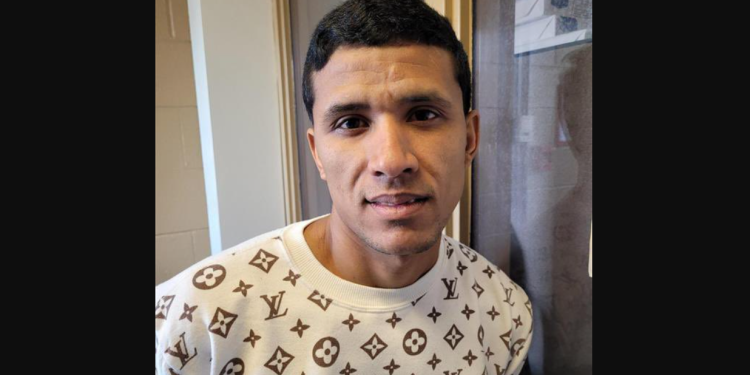



Chicago law enforcement struck a major blow against a dangerous transnational criminal organization by arresting an alleged hitman and high-ranking member of the notorious Tren de Aragua gang.
However, the arrest announcement has been complicated by a federal judge’s ruling that severely questioned the credibility of the official who made the statement.
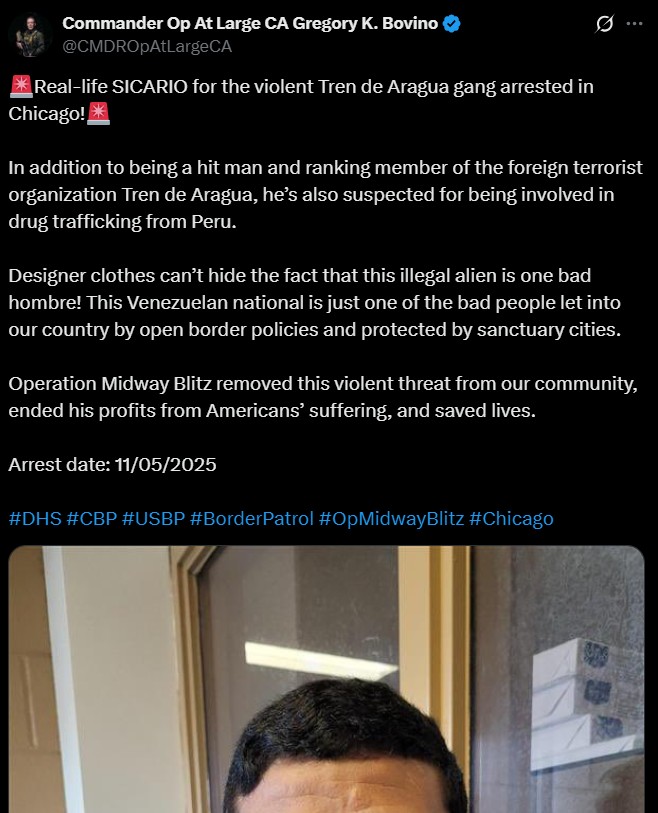
The Venezuelan national was apprehended in Chicago on November 5, 2025, during a multi-agency sweep dubbed Operation Midway Blitz. Commander Gregory K. Bovino confirmed the arrest via a social media post, identifying the suspect as a “real-life sicario” (hitman) for the violent group.
A Top-Ranking Threat
Authorities confirmed the suspect is a high-ranking member of Tren de Aragua, a gang that has violently expanded its operations across South America.
The group is known for its brutal involvement in drug trafficking, human smuggling, extortion, and murder-for-hire.
In addition to being a confirmed ranking member and hitman, the arrested man is suspected of being involved in drug trafficking operations originating from Peru.
Commander Bovino emphasized that the operation successfully “ended his profits from Americans’ suffering, and saved lives,” while also linking the suspect’s presence in the city to “open border policies and protected by sanctuary cities.”
The Tren de Aragua gang has been under intense surveillance by U.S. agencies due to its potential to rapidly increase violent crime rates in American cities.
Federal Judge Finds Commander Bovino ‘Admitted He Lied’
The news of the major gang arrest occurred on the same day a federal judge issued a preliminary injunction restricting the use of force by federal agents in Chicago.
The judge’s ruling included a scathing assessment of the evidence and the credibility of Commander Gregory K. Bovino, the official who announced the Tren de Aragua arrest.
The ruling follows a case concerning the heavy-handed tactics used by federal agents, specifically referencing a confrontation with protesters where Commander Bovino deployed tear gas.
Judge Ellis, who is presiding over the case, stated that the government’s initial claims justifying the use of force were not credible.
Judge Ellis explicitly said, “Defendant Bovino admitted that he lied,” about the sequence of events. The Department of Homeland Security had originally claimed Bovino was struck in the head with a rock before deploying tear gas. Judge Ellis found that “Video evidence ultimately disproved this.” During an hours-long deposition, Bovino later said he was hit after the tear gas was thrown.
New Rules for Agents
Judge Ellis slammed the government’s portrayal of Chicago events, stating, “I find the defendant’s evidence simply not credible.” She found that the plaintiffs were “threatened and harmed for exercising their constitutional rights.”
As a result, federal agents must now give at least two separate warnings before issuing riot control weapons, providing a “reasonable opportunity” for people to comply.
Attorney Steve Art, representing the plaintiffs, thanked the judge, saying, “We appreciate you protecting this community.”