
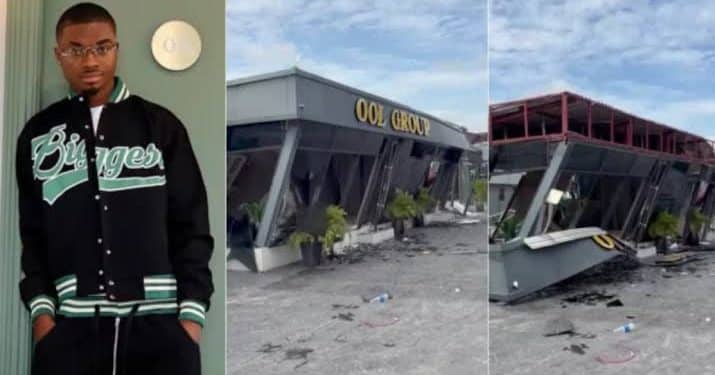



Popular media personality and luxury car dealer, Ola of Lagos, has spoken out to address viral reports linking him to the Skywise Group property recently demolished by the Lagos State Government.
In a video message shared across his social media pages, Ola clarified that contrary to widespread rumours, he does not own the demolished property. According to him, he merely leased a section of the Skywise building to run his car dealership business.
“I want to clear the air about the demolition of my car lot. I never owned the Skywise Group property, I only rented a portion to operate my business. The Lagos State Government acted because some safety measures were not followed, not because of any personal issue with me,” Ola explained.
The clarification comes amid intense online speculation after viral clips showed parts of the Skywise complex being pulled down by state officials for allegedly violating building and safety regulations.
The development quickly fueled claims that the demolition was targeted at Ola, who is known for showcasing luxury cars and high-end properties on social media.
Reacting to the controversy, human rights activist Deji Adeyanju had earlier accused Ola of falsely presenting himself as the owner of the property, a claim the car influencer has now firmly denied.
Ola urged Nigerians to be cautious about spreading misinformation, stressing that his name and brand were being dragged into an issue that had nothing to do with him directly.
“People need to verify news before posting or commenting. The demolition was a government action against the owners of the property for not meeting safety standards. My business was only affected because I rented space there,” he stated.
He also reassured his followers and clients that his dealership remains operational and committed to conducting business within the bounds of the law.
“We’re still standing strong. It’s a setback, but not the end. We’ll keep doing business the right way,” he added.
The Skywise Group demolition is part of an ongoing Lagos State Government clampdown on properties allegedly built without approval or in violation of urban planning laws, a move that has continued to stir conversations about regulation and fairness in the real estate and business sectors.