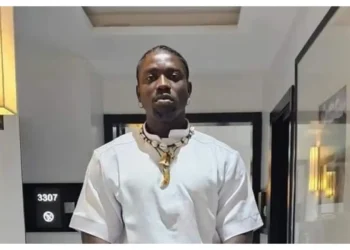

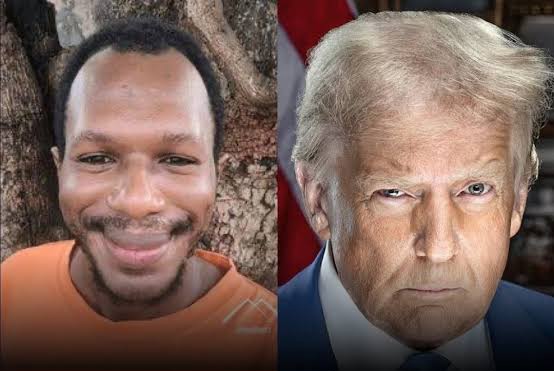



Controversial social media critic, Daniel Regha, has weighed in on former U.S. President Donald Trump’s recent comment describing Nigeria as a “disgraceful country,” following reports of alleged genocide against Christians in parts of the nation.
Trump, in a statement released on Saturday, had condemned the continuous attacks on Christians in Nigeria, warning that if the government failed to take decisive action, the United States would “immediately stop all aid and assistance” to the West African country.
The former American leader also hinted that the U.S. might be forced to “go into Nigeria” to deal with the terrorists allegedly behind the ongoing religious persecution, describing the nation as “that now disgraced country.”
Reacting to Trump’s remarks, Daniel Regha took to his official X account on Sunday to share his thoughts, suggesting that Nigeria’s poor global image stems from deep-rooted corruption and failed leadership across all regions.
“Nigeria is a ‘disgraced country’ today as a result of bad leadership from all regions,” Regha wrote. “Corruption is found in every state and local government, and all ethnicities are involved from Hausa to Igbo to Yoruba to Urhobo, and others.”
The outspoken influencer blamed both past and present administrations for the country’s current predicament, arguing that President Bola Tinubu’s government has not shown enough commitment to addressing key national challenges.
“Past administrations failed, and Tinubu’s administration is failing because the leaders who represent different tribes and constituencies aren’t speaking up,” he stated. “State governments are equally acting nonchalantly by not solving regional problems but instead playing politics.”
Regha also urged Nigerians to stop pointing fingers at the federal government alone, noting that many local and state representatives have equally failed the people. “Before you shift the blame, remember that the State House of Assembly has your people in there, and state governance is by indigene,” he added.
His comments have since sparked reactions online, with many agreeing that Nigeria’s crisis goes beyond religion, reflecting years of poor governance, corruption, and leadership failure at all levels.