

STORY YOUMISSED




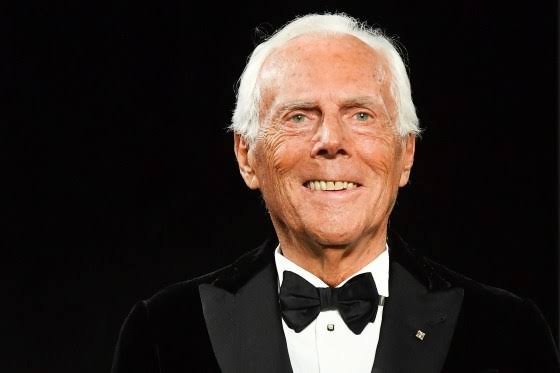
The world of fashion is mourning the loss of legendary Italian designer Giorgio Armani, who has died at the age of 91.
Widely regarded as one of the most influential figures in modern fashion, Armani’s name became synonymous with elegance, sophistication, and timeless style.
Born in 1934 in Piacenza, northern Italy, Armani initially pursued a career in medicine before his path veered toward design in the 1960s.
In 1975, alongside his late partner Sergio Galeotti, he launched the Armani label, which would go on to redefine tailoring and set new global standards of style.
From the very beginning, Armani’s work was revolutionary. He transformed men’s and women’s suits, stripping them of rigid formality and imbuing them with ease, elegance, and comfort.
“He put women into a uniform of suits just as radical as Chanel’s… By contrast, he relaxed menswear, deconstructing traditional tailoring in a manner that has affected how just about every suit in the world is made,” fashion critic Alexander Fury reflected.
Armani’s influence extended far beyond the runway. He pioneered red carpet fashion, becoming the go-to designer for Hollywood royalty including Zendaya, Cate Blanchett, and Julia Roberts.
His imprint on cinema is also indelible, having designed iconic costumes for films such as American Gigolo and The Wolf of Wall Street.
Beyond fashion, Armani built a multi-billion-pound empire that stretched into fragrances, beauty, music, sport, and luxury hospitality.
His company today generates more than £2bn annually, a testament to his vision and business acumen. He was also a devoted sports supporter, backing Inter Milan and owning basketball club Olimpia Milano.
But Armani was never content with mere success. In 2006, he made history as the first major designer to ban underweight models from his runway shows, following the tragic death of Brazilian model Ana Carolina Reston.
It was a bold move that reshaped the industry’s conversation about health and body image.
Until his final days, Armani remained deeply committed to his work. In a statement, his brand confirmed he “worked until his final days, dedicating himself to the company, the collections and the many ongoing future projects.” He was, it added, “indefatigable to the end” and “driven by relentless curiosity and a deep attention to the present and to people.”
Just earlier this year, in March 2025, Armani was still shaping the future of fashion, declaring he “wanted to imagine new harmony” in his latest collection.
Tributes have poured in from across the fashion world. Vogue’s Laura Ingham described him as a “true gentleman” and “titan of the industry,” adding: “If you don’t know anything about fashion, you’ll still know Giorgio Armani… his legacy is woven not only into fashions past and present but will continue to shape its future for generations to come.”
Over the course of his illustrious career, Armani was recognized with some of the highest honors, including the French Legion of Honour and Italy’s Order of Merit for Labour.
From a medical student to a fashion visionary, Armani’s journey was one of reinvention, resilience, and relentless pursuit of excellence. His legacy lives on in every sharply cut suit, every elegant red-carpet gown, and every designer who dares to dream differently.